Etch
Product Design | Research
Project Overview
A learning platform for students to study and retain classroom information through spacial learning.
My Contributions
Lead Designer, Researcher
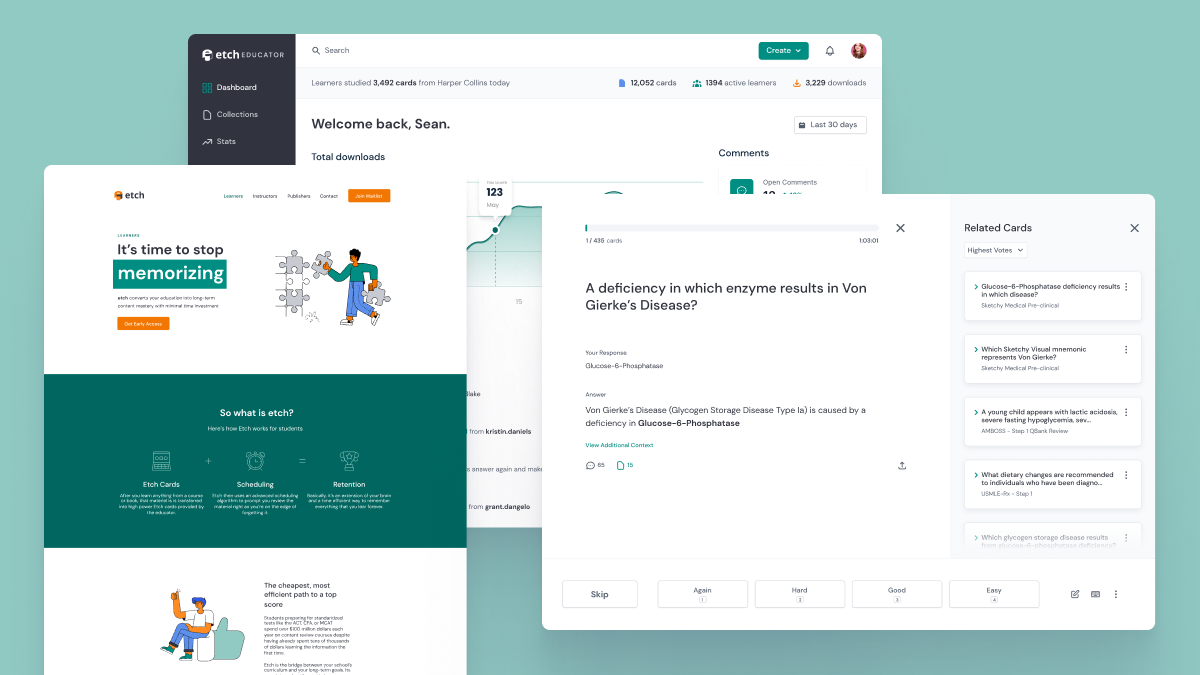
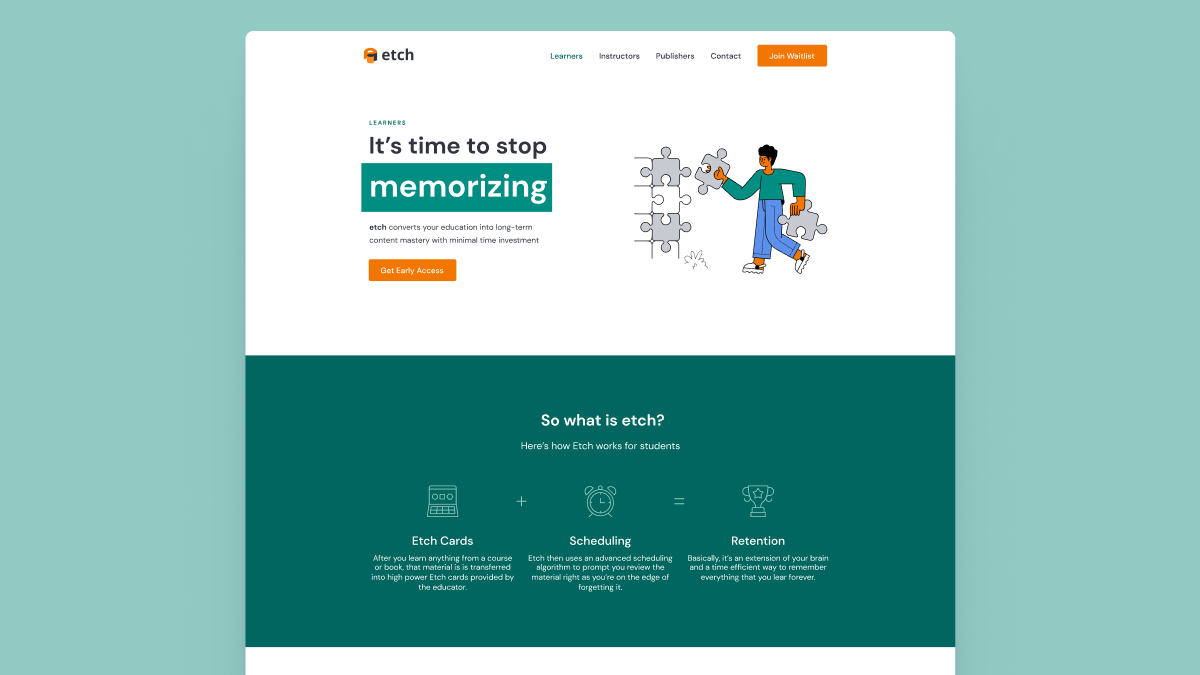
Multiple screens from the landing page, to inside the app and flashcard viewer.
Project Goal
Etch is a learning platform specializing in spacial learning. It's a learning concept that uses progressively longer intervals between learning sessions to help students retain more information.
Dylan Mahler and I were brought on from the start to get a concept put together to be able to present to investors and to hand off to developers to create.
The goal was to create a learning platform that made it easy for students to create/buy/redeem/learn flash cards, while also including social features and gamification to keep users active and engaged in learning.
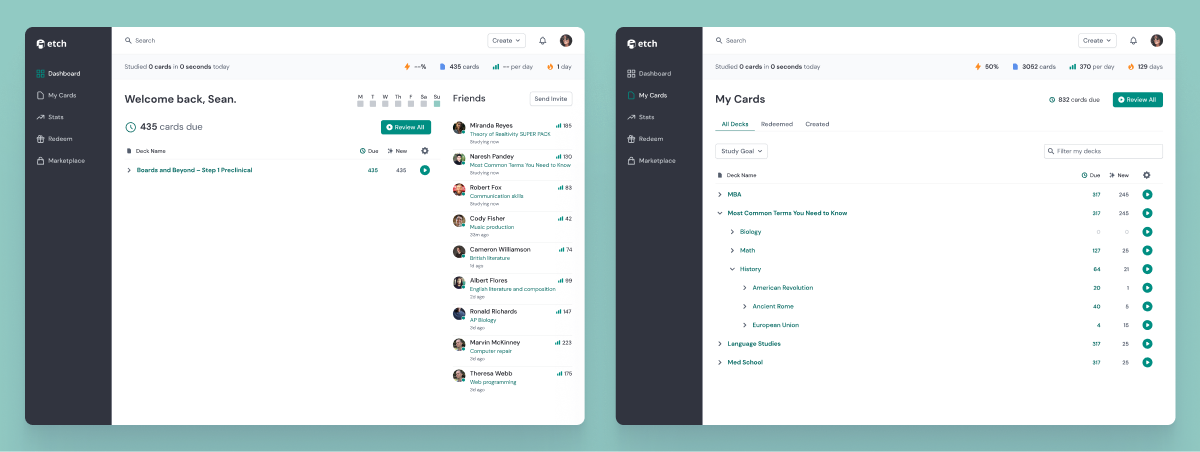
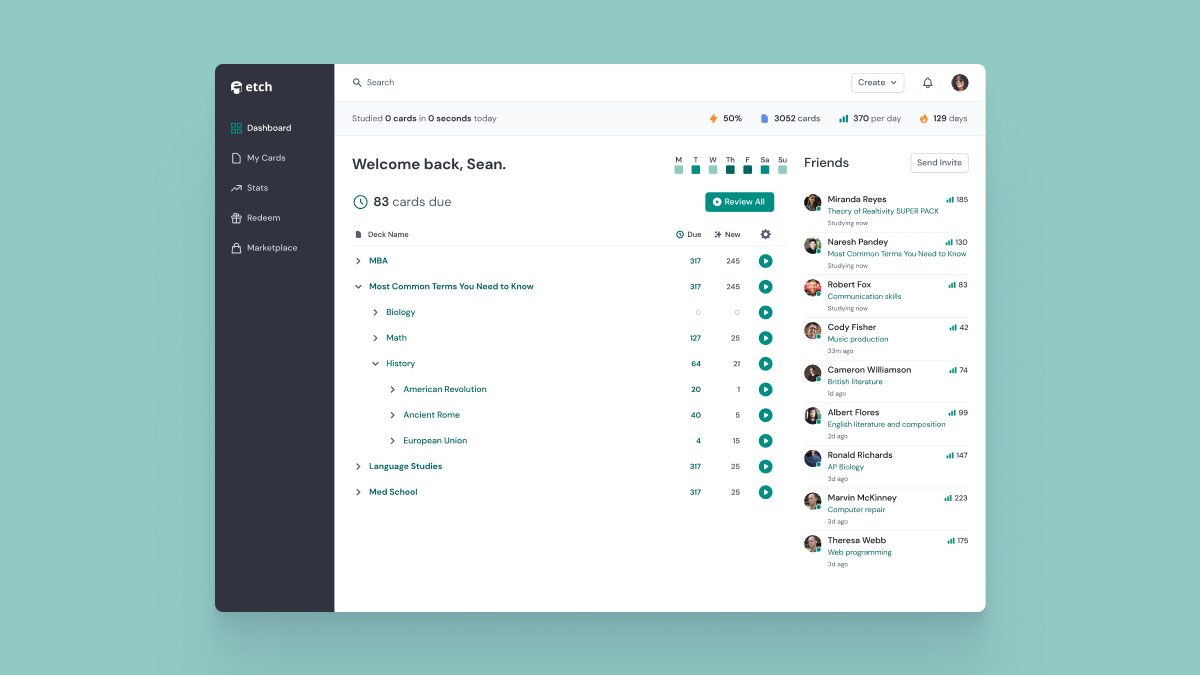
The Etch dashboard shows your streaks, your card decks, and what your friends have been studying. The My Cards page gives a full breakdown of your decks.
Research
When the founder of Etch came to us, he was a heavy user of Anki, a flash card program that is insanely powerful, but cumbersome to use and not easy for newcomers. He wanted to change that, so we first dived headfirst into Anki to understand what it did well and where we could improve it.
We also looked at other popular learning platforms like Quizlet and Duolingo to see how other players in the flashcard/learning space were designing their platforms.
Explorations
We started out by building the basics of a brand and common components to rapidly be able to iterate through design ideas.
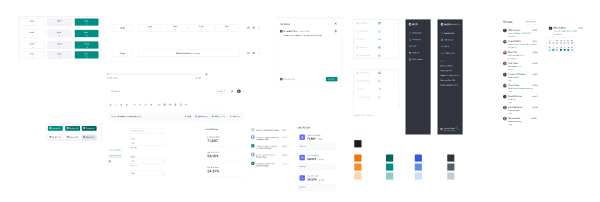
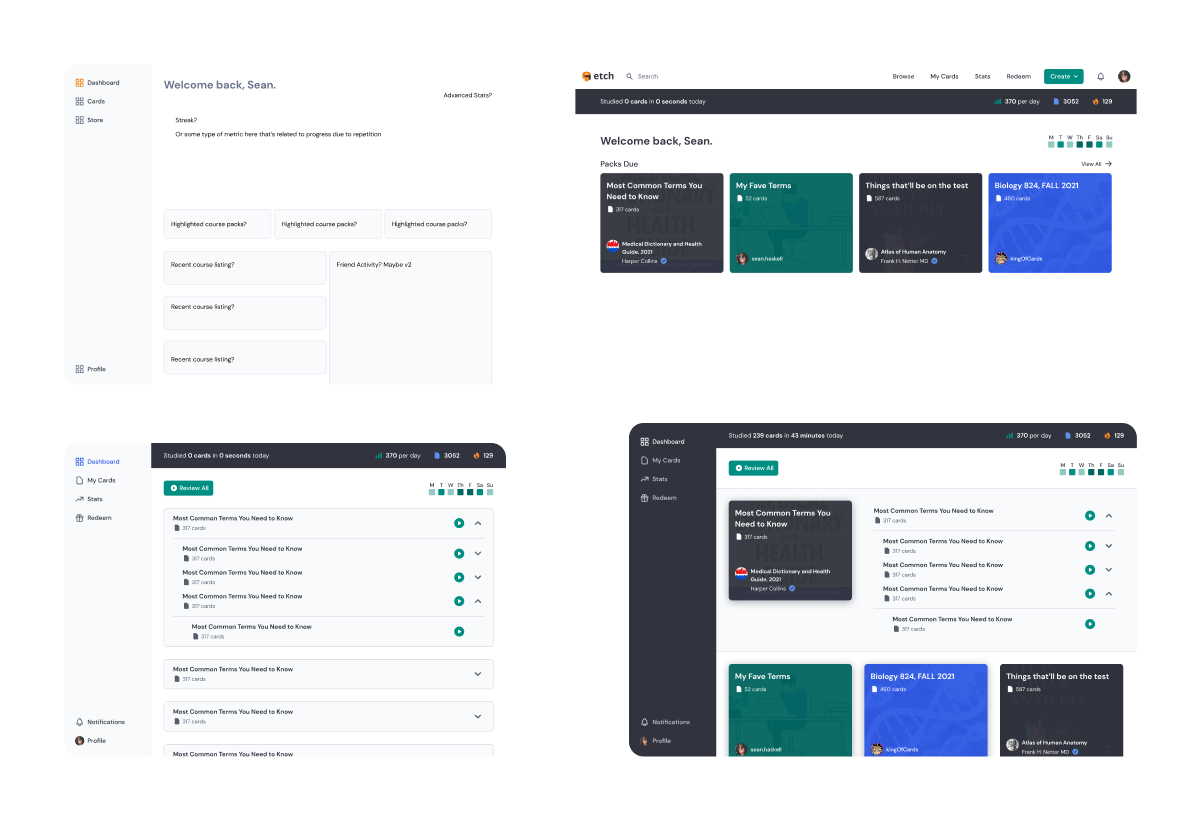
Then it was figuring out the initial layout of the app.
Early concepts for the Etch dashboard.
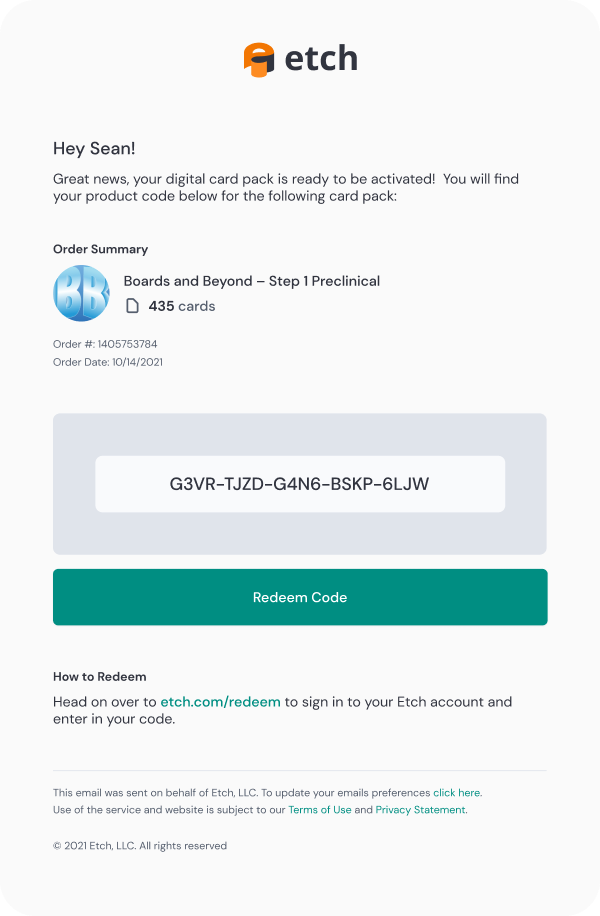
We also needed to figure out how users could purchase codes from publishers and third parties, then redeem them within the app.
Flash Card Workflow
The flash card experience was the heart of Etch, so we spent a lot of time refining the design and workflow for users.
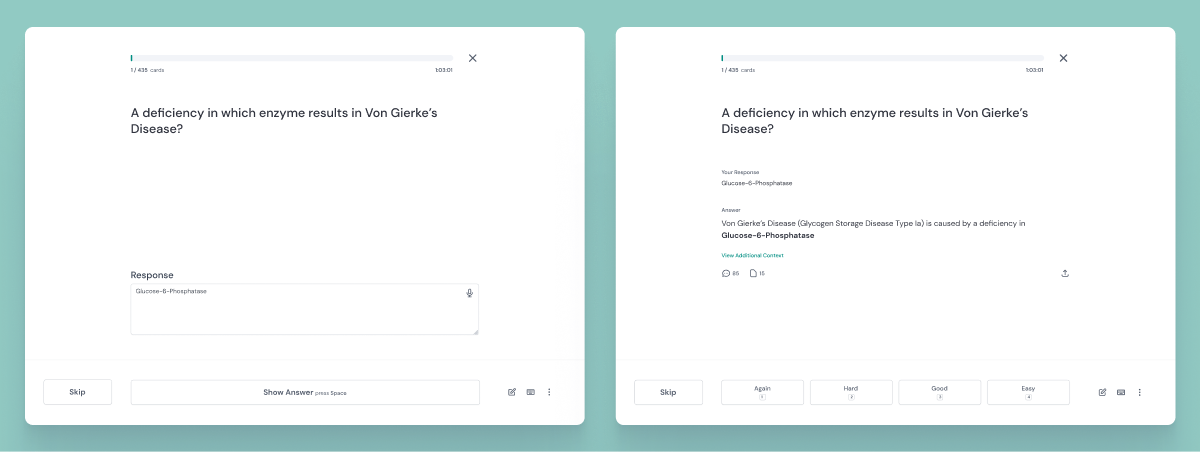
Users needed to be able to quickly navigate through potentially hundreds of cards, so each main function could be triggered by a keyboard shortcut.
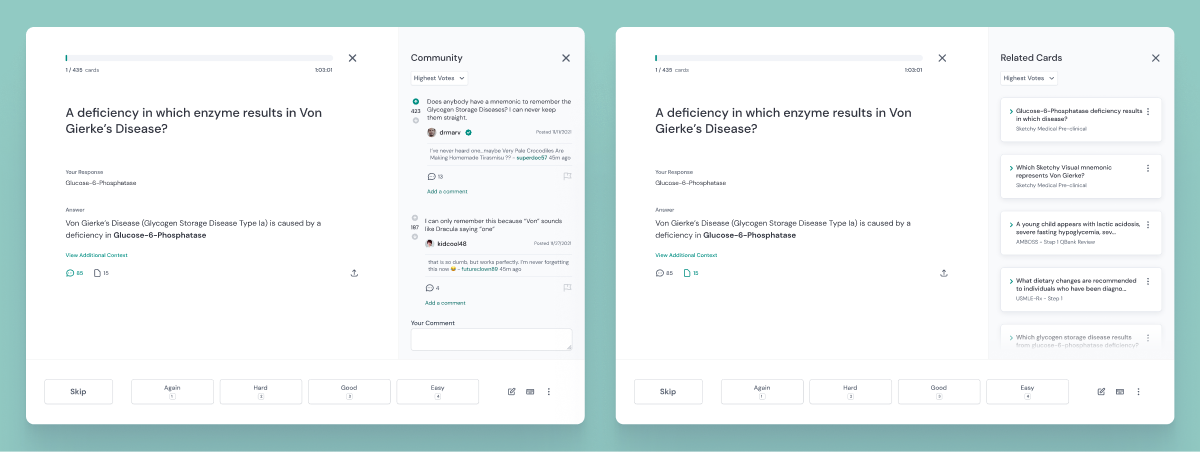
Etch card interface. Showing the question on the left and the revealed answer on the right.
Because social features were also a major part of Etch, we added in an entire area to comment and upvote/downvote comments on public cards.
The system also recommends other related cards based on the card the user was studying, which users could then look at and add to their deck if they wanted to.
Social functions make each card more interactive and the ability to find related cards helps discover new information.
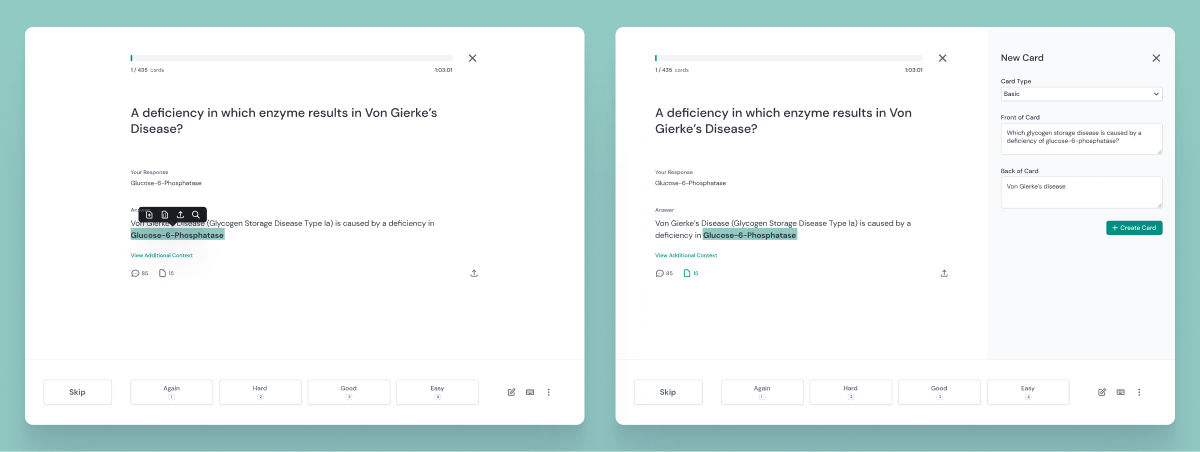
We even added the ability to highlight key words and phrases to unlock even more potential, such as searching for other cards or creating a new one right from within the interface.
Highlighting words or phrases within the cards unlocks more features like creating a new card right away.
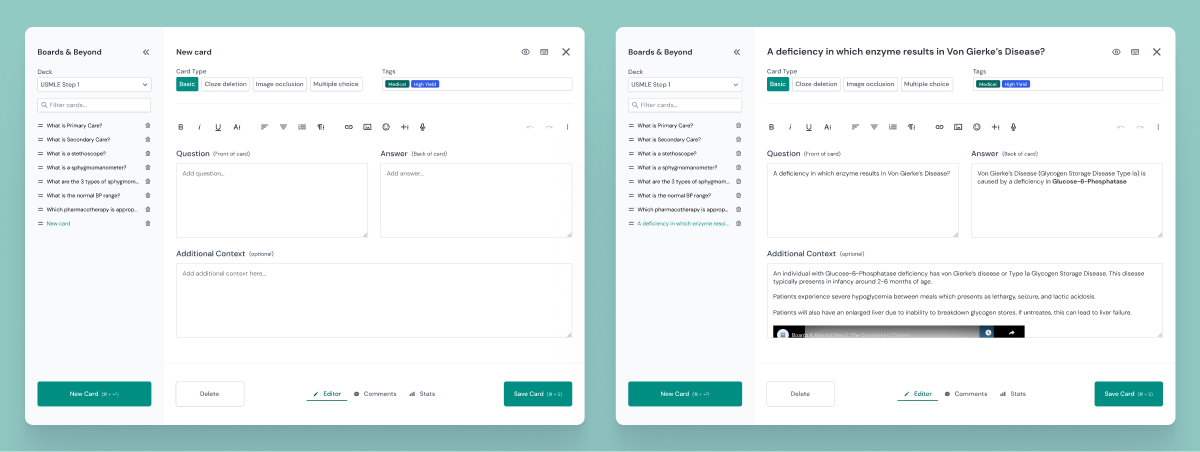
Creating cards was also a very important part, which is where the full card editor interface comes in.
Multiple card types were supported as well as adding additional content such as videos, images, etc. Comments could be moderated from this screen and statistics for card usage would also be available.
Social functions make each card more interactive and the ability to find related cards help discover new information.
Educators & Publishers
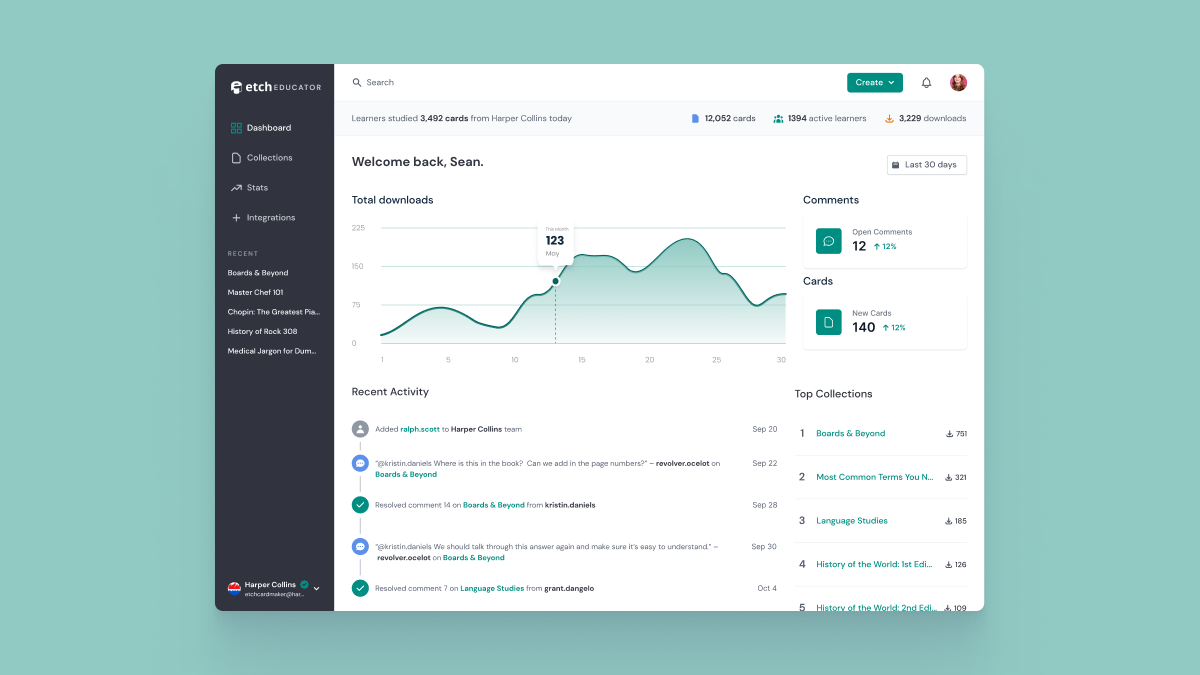
Outside of the main user type, there was also the need for specific admin screens for Educators & Publishers.
Educators could create card decks based on their classes and lectures to then distribute on the platform to students.
Publishers could create card desks based on their various textbooks and sell them to students in the card shop or through their own website.
Dashboard for a publisher to see stats on their card collections performance as well as tasks to complete.
Landing Page
In order to establish the brand and give investors something to access online while the application was in development, a landing page was created to generate buzz and build out a mailing list.
Etch landing page etchlearn.com
Outcomes
The initial designs were used to secure investor funding as well as handed off to developers to build the app and website.
As of today, the Etch team now has six core members working to bring the entire platform to life with hopes of launching the beta sometime later this year. I'm still helping the team create new interfaces and experiences in the app, so stay tuned for more!